ACT I
I CONTAIN MULTITUDES
1
Chuck was looking forward to having a baby sister. His mother promised he could hold her if he was very careful. Of course he was also looking forward to having parents, but none of that worked out thanks to an icy patch on an I-95 overpass. Much later, in college, he would tell a girlfriend that there were all sorts of novels, movies, and TV shows where a main character’s parents died in a car crash, but he was the only person he knew who’d had that happen in real life.
The girlfriend thought this over, then rendered her verdict. “I’m sure it happens all the time, although parents can also be taken in housefires, tornadoes, hurricanes, earthquakes, and avalanches while on ski vacations. To name only a few of the possibilities. And what makes you think you’re a main character in anything but your own mind?”
She was a poet and sort of a nihilist. The relationship only lasted a semester.
Chuck wasn’t in the car when it went flying upside-down from the turnpike overpass because his parents were having a dinner date and he was being babysat by his grandparents, who at that time he was still calling Zaydee and Bubbie (this mostly ended in the third grade, when kids made fun of him and he reverted to the more all-American Grandma and Grandpa). Albie and Sarah Krantz lived just a mile down the road, and it was natural enough for them to raise him after the accident when he became what he first believed to be an orphant. He was seven.
For a year—maybe a year and a half—that was a house of unadulterated sadness. The Krantzes had not only lost their son and daughter-in-law, they had lost the granddaughter who would have been born just three months later. The name had already been picked out: Alyssa. When Chuck said that sounded to him like rain, his mother had laughed and cried at the same time.
He never forgot that.
He knew his other grandparents of course, there were visits every summer, but they were basically strangers to him. They called a lot after he became an orphant, your basic how-are-you-doing-how’s-school calls, and the summer visits continued; Sarah (aka Bubbie, aka Grandma) took him on the plane. But his mother’s parents remained strangers, living in the foreign land of Omaha. They sent him presents on his birthday and at Christmas—the latter especially nice since Grandma and Grandpa didn’t “do” Christmas—but otherwise he continued to think of them as outliers, like the teachers who were left behind as he moved up through the grades.
Chuck began to slip his metaphorical mourning garments first, necessarily pulling his grandparents (old, yeah, but not ancient) out of their own grief. There came a time, when Chuck was ten, that they took the boy to Disney World. They had adjoining rooms at the Swan Resort, the door between the rooms kept open at night, and Chuck only heard his grandma crying once. Mostly, they had fun.
Some of that good feeling came back home with them. Chuck sometimes heard Grandma humming in the kitchen, or singing along with the radio. There had been lots of take-out meals after the accident (and whole recyclable bins full of Grandpa’s Budweiser bottles), but in the year after Disney World, Grandma began cooking again. Good meals that put weight on a formerly skinny boy.
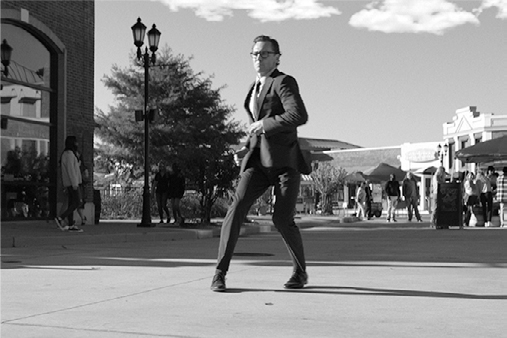
She liked rock and roll while she was cooking, music Chuck would have thought much too young for her, but which she clearly enjoyed. If Chuck wandered into the kitchen looking for a cookie or maybe hoping to make a brown-sugar roll-up with a slice of Wonder Bread, Grandma was apt to hold out her hands to him and start snapping her fingers. “Dance with me, Henry,” she’d say.
His name was Chuck, not Henry, but he usually took her up on it. She taught him jitterbug steps and a couple of crossover moves. She told him there were more, but her back was too creaky to attempt them. “I can show you, though,” she said, and one Saturday brought back a stack of videotapes from the Blockbuster store. There was Swing Time, with Fred Astaire and Ginger Rogers, West Side Story, and Chuck’s favorite, Singin’ in the Rain, where Gene Kelly danced with a lamppost.
“You could learn those moves,” she said. “You’re a natural, kiddo.”
He asked her once, when they were drinking iced tea after an especially strenuous go to Jackie Wilson’s “Higher and Higher,” what she had been like in high school.
“I was a kusit,” she said. “But don’t tell your zaydee I said that. He’s old-school, that one.”
Chuck never told.
And he never went in the cupola.
Not then.
He asked about it, of course, and more than once. What was up there, what you could see from the high window, why the room was locked. Grandma said it was because the floor wasn’t safe and he might go right through it. Grandpa said the same thing, that there was nothing up there because of the rotten floor, and the only thing you could see from those windows was a shopping center, big deal. He said that until one night, just before Chuck’s eleventh birthday, when he told at least part of the truth.
2
Drinking is not good for secrets, everybody knows that, and after the death of his son, daughter-in-law, and granddaughter-to-be (Alyssa, sounds like rain), Albie Krantz drank a great deal. He should have bought stock in Anheuser-Busch, that was how much he drank. He could do it because he was retired, and comfortably off, and very depressed.
After the trip to Disney World the drinking tapered off to a glass of wine with dinner or a beer in front of a baseball game. Mostly. Once in awhile—every month at first, every couple of months later on—Chuck’s grandpa tied one on. Always at home, and never making any fuss about it. The next day he would move slowly and eat little until afternoon, then he was back to normal.
One night while watching the Red Sox get thumped by the Yankees, when Albie was well into his second sixpack of Bud, Chuck once more raised the subject of the cupola. Mostly just to have something to talk about. With the Sox down by nine, the game wasn’t exactly holding his attention.
“I bet you can see way past the Westford Mall,” Chuck said.
Grandpa considered this, then pushed the mute button on the TV controller, silencing an ad for Ford Truck Month. (Grandpa said Ford stood for Fix Or Repair Daily.) “If you went up there you might see a lot more than you wanted,” he said. “That’s why it’s locked, boychick.”
Chuck felt a small and not entirely unpleasurable chill go through him, and his mind immediately flashed to Scooby-Doo and his friends, chasing down spooks in the Mystery Machine. He wanted to ask what Grandpa meant, but the adult part of him—not there in person, no, not at ten, but something that had begun to speak on rare occasions—told him to be quiet. Be quiet and wait.
“Do you know what style this house is, Chucky?”
“Victorian,” Chuck said.
“That’s right, and not pretend Victorian, either. It was built in 1885, been remodeled half a dozen times since, but the cupola was there from the start. Your bubbie and I bought it when the shoe business really took off, and we got it for a song. Been here since 1971, and in all those years I haven’t been up to that damn cupola half a dozen times.”
“Because the floor’s rotted?” Chuck asked, with what he hoped was appealing innocence.
“Because it’s full of ghosts,” Grandpa said, and Chuck felt that chill again. Not so pleasurable this time. Although Grandpa might be joking. He did joke from time to time these days. Jokes were to Grandpa what dancing was to Grandma. He tipped his beer. Belched. His eyes were red. “Christmas Yet to Come. Do you remember that one, Chucky?”
Chuck did, they watched A Christmas Carol every year on Christmas Eve even though they didn’t “do” Christmas otherwise, but that didn’t mean he knew what his grandpa was talking about.
“The Jefferies boy was only a short time later,” Grandpa said. He was looking at the TV, but Chuck didn’t think he was actually seeing it. “What happened to Henry Peterson… that took longer. It was four, maybe five years on. By then I’d almost forgotten what I saw up there.” He jerked a thumb at the ceiling. “I said I’d never go up there again after that, and I wish I hadn’t. Because of Sarah—your bubbie—and the bread. It’s the waiting, Chucky, that’s the hard part. You’ll find that out when you’re—”
The kitchen door opened. It was Grandma, back from Mrs. Stanley’s across the street. Grandma had taken her chicken soup because Mrs. Stanley was feeling poorly. So Grandma said anyway, but even at not quite eleven, Chuck had a good idea there was another reason. Mrs. Stanley knew all the neighborhood gossip (“She’s a yente, that one,” Grandpa said), and was always willing to share. Grandma poured all the news out to Grandpa, usually after inviting Chuck out of the room. But out of the room didn’t mean out of earshot.
“Who was Henry Peterson, Grandpa?” Chuck asked.
But Grandpa had heard his wife come in. He straightened up in his chair and put his can of Bud aside. “Look at that!” he cried in a passable imitation of sobriety (not that Grandma would be fooled). “The Sox have got the bases loaded!”
3
In the top of the eighth, Grandma sent Grandpa down to the Zoney’s Go-Mart at the bottom of the block to get milk for Chuck’s Apple Jacks in the morning. “And don’t even think of driving. The walk will sober you up.”
Grandpa didn’t argue. With Grandma he rarely did, and when he gave it a try, the results weren’t good. When he was gone, Grandma—Bubbie—sat down next to Chuck on the couch and put an arm around him. Chuck put his head on her comfortably padded shoulder. “Was he blabbing to you about his ghosts? The ones that live in the cupola?”
“Um, yeah.” There was no point in telling a lie; Grandma saw right through those. “Are there? Have you seen them?”
Grandma snorted. “What do you think, hantel?” Later it would occur to Chuck that this wasn’t an answer. “I wouldn’t pay too much attention to Zaydee. He’s a good man, but sometimes he drinks a little too much. Then he rides his hobby horses. I’m sure you know what I’m talking about.”
Chuck did. Nixon should have gone to jail; the faygelehs were taking over American culture and turning it pink; the Miss America pageant (which Grandma loved) was your basic meat-show. But he had never said anything about ghosts in the cupola before that night. At least to Chuck.
“Bubbie, who was the Jefferies boy?”
She sighed. “That was a very sad thing, boychuck.” (This was her little joke.) “He lived on the next block over and got hit by a drunk driver when he chased a ball into the street. It happened a long time ago. If your grandpa told you he saw it before it happened, he was mistaken. Or making it up for one of his jokes.”
Grandma knew when Chuck was lying; on that night Chuck discovered that was a talent that could go both ways. It was all in the way she stopped looking at him and shifted her eyes to the television, as if what was going on there was interesting, when Chuck knew Grandma didn’t give a hang for baseball, not even the World Series.
“He just drinks too much,” Grandma said, and that was the end of it.
Maybe true. Probably true. But after that, Chuck was frightened of the cupola, with its locked door at the top of a short (six steps) flight of narrow stairs lit by a single bare bulb hanging on a black cord. But fascination is fear’s twin brother, and sometimes after that night, if both of his grandparents were out, he dared himself to climb them. He would touch the Yale padlock, wincing if it rattled (a sound that might disturb the ghosts pent up inside), then hurry back down the stairs, looking over his shoulder as he went. It was easy to imagine the lock popping open and dropping to the floor. The door creaking open on its unused hinges. If that happened, he guessed he might die of fright.
4
The cellar, on the other hand, wasn’t a bit scary. It was brightly lighted by fluorescents. After selling his shoe stores and retiring, Grandpa spent a lot of time down there doing woodwork. It always smelled sweetly of sawdust. In one corner, far from the planers and sanders and the bandsaw he was forbidden to touch, Chuck found a box of Grandpa’s Hardy Boys books. They were old-timey but pretty good. He was reading The Sinister Signpost one day in the kitchen, waiting for Grandma to remove a batch of cookies from the oven, when she grabbed the book out of his hands.
“You can do better than that,” she said. “Time to step up your game, boychuck. Wait right there.”
“I was just getting to the good part,” Chuck said.
She snorted, a sound to which only Jewish bubbies do true justice. “There are no good parts in these,” she said, and took the book away.
What she came back with was The Murder of Roger Ackroyd. “Now this is a good mystery story,” she said. “No dummocks teenagers running around in jalopies. Consider this your introduction to actual writing.” She considered. “Okay, so not Saul Bellow, but not bad.”
Chuck started the book just to please Grandma, and was soon lost. In his eleventh year he read almost two dozen Agatha Christies. He tried a couple about Miss Marple, but he was much fonder of Hercule Poirot with his fussy mustache and little gray cells. Poirot was one thinking cat. One day, during his summer vacation, Chuck was reading Murder on the Orient Express in the backyard hammock and happened to glance up at the window of the cupola far above. He wondered how Monsieur Poirot would go about investigating it.
Aha, he thought. And then Voilà, which was better.
The next time Grandma made blueberry muffins, Chuck asked if he could take some to Mrs. Stanley.
“That’s very thoughtful of you,” Grandma said. “Why don’t you do that? Just remember to look both ways when you cross the street.” She always told him that when he was going somewhere. Now, with his little gray cells engaged, he wondered if she was thinking of the Jefferies boy.
Grandma was plump (and getting plumper), but Mrs. Stanley was twice her size, a widow who wheezed like a leaky tire when she walked and always seemed to be dressed in the same pink silk wrapper. Chuck felt vaguely guilty about bringing her treats that would add to her girth, but he needed information.
She thanked him for the muffins and asked—as he’d been pretty sure she would—if he would like to have one with her in the kitchen. “I could make tea!”
“Thank you,” Chuck said. “I don’t drink tea, but I wouldn’t mind a glass of milk.”
When they were seated at the little kitchen table in a flood of June sunshine, Mrs. Stanley asked how things were going with Albie and Sarah. Chuck, mindful that anything he said in this kitchen would be on the street before the day was out, said they were doing fine. But because Poirot said you had to give a little if you wanted to get a little, he added that Grandma was collecting clothes for the Lutheran homeless shelter.
“Your gramma’s a saint,” Mrs. Stanley said, obviously disappointed there wasn’t more. “What about your granddad? Did he get that thing on his back looked at?”
“Yeah,” Chuck said. He took a sip of milk. “The doctor took it off and had it tested. It wasn’t one of the bad ones.”
“Thank God for that!”
“Yes,” Chuck agreed. Having given, he now felt entitled to get. “He was talking with Grandma about someone named Henry Peterson. I guess he’s dead.”
He was prepared for disappointment; she might have never heard of Henry Peterson. But Mrs. Stanley widened her eyes until Chuck was actually afraid they might fall out, and grasped her neck like she had a piece of blueberry muffin stuck in there. “Oh, that was so sad! So awful! He was the bookkeeper who did your father’s accounts, you know. Other companies, too.” She leaned forward, her wrapper giving Chuck a view of a bosom so large it seemed hallucinatory. She was still clutching her neck. “He killed himself,” she whispered. “Hung himself!”
“Was he embezzling?” Chuck asked. There was a lot of embezzling in Agatha Christie books. Also blackmail.
“What? God, no!” She pressed her lips together, as if to keep in something not fit for the ears of such a beardless youth as the one sitting across from her. If that was the case, her natural proclivity to tell everything (and to anyone) prevailed. “His wife ran away with a younger man! Hardly old enough to vote, and she was in her forties! What do you think of that?”
The only reply Chuck could think of right off the bat was “Wow!” and that seemed to suffice.
Back at home he pulled his notebook off the shelf and jotted, G. saw ghost of Jefferies boy not long before he died. Saw ghost of H. Peterson 4 or 5 YEARS before he died. Chuck stopped, chewing the end of his Bic, troubled. He didn’t want to write what was in his mind, but felt that as a good detective he had to.
Sarah and the bread. DID HE SEE GRANDMA’S GHOST IN THE CUPOLA???
The answer seemed obvious to him. Why else would Grandpa have talked about how hard the waiting was?
Now I’m waiting, too, Chuck thought. And hoping that it’s all just a bunch of bullshit.
5
On the last day of sixth grade, Miss Richards—a sweet, hippy-dippyish young woman who had no command of discipline and would probably not last long in the public education system—tried to read Chuck’s class some verses of Walt Whitman’s “Song of Myself.” It didn’t go well. The kids were rowdy and didn’t want poetry, only to escape into the months of summer stretching ahead. Chuck was the same, happy to throw spitballs or give Mike Enderby the finger when Miss Richards was looking down at her book, but one line clanged in his head and made him sit up straight.
When the class was finally over and the kids set free, he lingered. Miss Richards sat at her desk and blew a strand of hair back from her forehead. When she saw Chuck still standing there, she gave him a weary smile. “That went well, don’t you think?”
Chuck knew sarcasm when he heard it, even when the sarcasm was gentle and self-directed. He was Jewish, after all. Well, half.
“What does that mean when he says ‘I am large, I contain multitudes’?”
That made her smile perk up. She propped one small fist on her chin and looked at him with her pretty gray eyes. “What do you think it means?”
“All the people he knows?” Chuck ventured.
“Yes,” she agreed, “but maybe he means even more. Lean forward.”
He leaned over her desk, where American Verse lay on top of her grade book. Very gently, she put her palms to his temples. They were cool. They felt so wonderful he had to suppress a shiver. “What’s in there between my hands? Just the people you know?”
“More,” Chuck said. He was thinking of his mother and father and the baby he never got a chance to hold. Alyssa, sounds like rain. “Memories.”
“Yes,” she said. “Everything you see. Everything you know. The world, Chucky. Planes in the sky, manhole covers in the street. Every year you live, that world inside your head will get bigger and brighter, more detailed and complex. Do you understand?”
“I think so,” Chuck said. He was overwhelmed with the thought of a whole world inside the fragile bowl of his skull. He thought of the Jefferies boy, hit in the street. He thought of Henry Peterson, his father’s bookkeeper, dead at the end of a rope (he’d had nightmares about that). Their worlds going dark. Like a room when you turned out the light.
Miss Richards took her hands away. She looked concerned. “Are you all right, Chucky?”
“Yes,” he said.
“Then go on. You’re a good boy. I’ve enjoyed having you in class.”
He went to the door, then turned back. “Miss Richards, do you believe in ghosts?”
She considered this. “I believe memories are ghosts. But spooks flapping along the halls of musty castles? I think those only exist in books and movies.”
And maybe in the cupola of Grandpa’s house, Chuck thought.
“Enjoy your summer, Chucky.”