The place came to feel, Adams later remarked, like ‘our barbed wire ivory tower’. Adams was a witty, engaging interlocutor with a piercing mind. But for all his gregariousness, there were aspects of his personality that he kept to himself. Whereas Hughes had come to regard himself not just as unreligious but anti-religious, Adams was quietly immersed in Catholicism. At night, Hughes read speeches by Fidel Castro; Adams recited the rosary.
By the mid-1970s, Adams was confronting a dilemma. From the moment the Provisionals emerged in 1969 and began to bring the fight directly to the unionist establishment, there had been a sense that it might take just one final, furious push to drive the British into the sea. It was this strategic thesis that accounted both for the frantic pace of operations during the early years of the Troubles and for the high morale that drove recruitment and galvanised the lads. As the conflict entered its sixth year, however, it appeared that matters might not be so simple. After years of violence, the brunt of which was often felt by the very citizenry the IRA claimed to represent, public support for the Provos had tapered. The British, meanwhile, seemed to be settling in for a conflict of indefinite duration. When Adams and Hughes met their subordinates for conversations at the wire, they could see a new set of installations being built at the prison – the so-called H Blocks, which, once they were completed, would have the capacity to house many more paramilitary detainees.
Adams’s father, Gerry Sr., had been an IRA man as well, and had taken part in a campaign during the 1940s that fitted squarely into the long republican history of noble failure. When Adams was growing up, he would see veterans of earlier conflicts hanging out at the Felons Club, a social club that his father had helped to found, where men like Albert Price would drink and tell war stories and ruminate about what could have been. It was almost as if ‘defeat suited them better than victory’, in the words of one historian, ‘for there was a sense in which Irish republicanism thrived on oppression and the isolated exclusivity that came with it’. During the early 1970s, it had become commonplace for the Provos to declare, every January, that this was the year they would eject the British once and for all. For people of Adams’s generation, who had beheld the fall of Saigon, the sudden toppling of regimes seemed like something that was readily achievable. But after a few years and a great abundance of spilled blood, those January resolutions were beginning to seem delusional. To be sure, there was a doomed romance in the notion of republican failure, a poetry in those archetypes of futility. But Gerry Adams was not a romantic.
This time, he told his men, the struggle must come to something. This generation of Irish republicans would not simply pass the baton to the next one; they must force change within their own lifetimes. Even as he made this case, however, Adams began to argue that it would be naive to expect immediate results. What the republican movement should do, instead, was hunker down for what would come to be known as the ‘long war’. Stop telling people victory is just a year away. Better to marshal your resources and plan for a fight that could take much longer.
This was not an easy argument to make. The foot soldiers of the Provos had been beaten by loyalists, shot at by the army, and tortured by the police. They had abandoned their families to go on the run, and now they found themselves locked up alongside Adams and Hughes at Long Kesh. They could readily embrace a message that said, ‘If you just fight a little harder right now, this will all be over soon.’ But it was quite another thing to tell them, ‘Get used to this, because the fight won’t end after our next big offensive. It could take years. Even decades.’
Adams also began to subtly modulate the language in which he talked about what victory itself might mean. It was important to fight the long war, but also to recognise that the end of the conflict would probably result not merely from a military triumph, but from some variety of political settlement. The armed struggle is simply a means to an end, Adams would tell the young IRA men at the wire. It is not the end itself.
‘Youse are politicians,’ he told them.
‘We’re not, really. We’re army,’ they replied.
‘No, you have to develop your consciousness in here,’ Adams insisted. ‘Politics is important.’
Adams commanded respect and loyalty inside the walls of Long Kesh, but he wanted to get his message to the volunteers fighting the war in Belfast and Derry. So in 1975, he began writing a series of articles for Republican News, the movement’s propaganda newspaper. Because it was illegal to be a member of the IRA, writing such articles under his own name might be risky, so Adams adopted a pseudonym, ‘Brownie’. After composing each fresh column, he would smuggle it out of the camp. Secret documents – or ‘comms’, as they were known – regularly made their way in and out of Long Kesh. These memos and letters would be etched in tiny handwriting on cigarette paper, then palmed to a visiting friend or spouse. In this manner, the IRA’s command structure inside the prison remained in near constant contact with their counterparts on the outside.
Republican News was edited by a baby-faced propagandist named Danny Morrison. Sometimes the Brownie columns were lighthearted, showcasing Adams’s dry humour. Sometimes they were treacly, though his sentimentality tended to feel more calculated than sincere. Often, the articles served the purpose of educating people on the outside about the conditions in which the prisoners lived. But Adams also used the columns to wrestle with his own emerging philosophy of the conflict. He frequently handed drafts to Brendan Hughes for feedback before he sent them out to be published. But Hughes had never been quite so analytically inclined. Sometimes he had to read a column three times just to get the thrust of Adams’s argument.
In 1977, Adams was released. On his final day, he paced around the yard with Hughes, talking strategy. He had come to believe that Sinn Féin, the political entity associated with the IRA, needed to operate more ‘in tandem’ with the armed organisation. He also thought that the Provos had to be restructured. Traditionally, the IRA had imitated the hierarchical configuration of the British military. But Adams believed that the Provos should reinvent themselves, adopting the type of cellular structure more typical of paramilitary organisations in Latin America. They would be more secure this way: if the authorities managed to interrogate and turn one gunman, he would know only the contacts in his particular cell, rather than the whole command. What Adams was proposing was an ambitious reorganisation. It was also the blueprint for an IRA that could fight the long war. On that final day at Long Kesh, with his belongings in a brown paper bag, Adams gave Hughes a hug before he walked to the gate. He joked that of the two of them, Hughes had the more enviable job, staying behind to keep things under control in Long Kesh. Adams may have been a free man, now, but he would have the more daunting task of reinventing the IRA.
The truth was that the job Hughes had would be anything but easy. Towards the end of 1975, internment had officially ended. From now on, rather than being detained indefinitely as political prisoners, paramilitary suspects would be charged like ordinary criminals. This might have seemed like mere semantics, a simple matter of classification, but the distinction cut to the core of the republican identity. To call IRA volunteers criminals was to delegitimise the very basis upon which they had taken up arms. Even in the face of bombs and bloodshed, the government in London might stubbornly refuse to call the Troubles a war, but as far as the IRA was concerned, Hughes and his comrades were soldiers, and, if captured, they should be held as prisoners of war. Internment had its own problems – you could be arrested without charge and confined without a trial for years. But people who were interned were generally permitted to wear their own clothes behind bars, and they could freely associate with their paramilitary colleagues. Now, with internment ending, anyone convicted of paramilitary activity was confined to an individual cell in the new facility at Long Kesh, the H Blocks. The prison issued uniforms, and it didn’t matter if you were an IRA volunteer or a common thief – you got the same uniform.
In the autumn of 1976 the republican prisoners rebelled, refusing to wear the clothes issued by the prison and initiating a so-called blanket protest, in which prisoners wrapped themselves, naked, in blankets, just as the Price sisters had done following their arrest in London. One ditty that the protesters sang captured the stakes:
I’ll wear no convict’s uniform
Nor meekly serve my time
That Britain might
Brand Ireland’s fight
Eight hundred years of crime.
What the protesters wanted was ‘special category’ status, which would effectively classify them as prisoners of war. But the authorities refused to grant it. Inside Long Kesh, relations between the inmates and the screws deteriorated, and a grinding game of mutual escalation took hold. The protesters refused to wear clothes, but, initially, they would leave their cells to shower and use the toilet. The guards, frustrated by their defiance, would sometimes subject them to beatings on these trips, and restricted their use of towels to cover and dry themselves. So the protesters started refusing to leave their cells at all. The guards were obliged to go from cell to cell, gathering chamber pots to be emptied. But the prisoners started tipping the pots so that piss sluiced under the cell doors and out into the corridor. And so the blanket protest, which had become a ‘no-wash protest’, now blossomed into the ‘dirty protest’. A great tide of urine coursed through the prison, which the guards now had to clean. This left the issue of what the protesters should do with their shit, and when they raised this dilemma with Hughes, who was the commanding officer inside the prison, he made a suggestion: Daub it on the walls.
Hughes and his men were naked and filthy, with wild beards and long, matted, unwashed hair, and now they began to paint the walls of the prison with their own solid waste, swirling it into van Gogh moons and lunatic patterns. The place took on the aspect of a madhouse. As maggot infestations set in and the threat of disease began to assert itself, a team of screws would barge into the squalor-encrusted cells and haul the scrawny prisoners out, then hose the men down while another team attacked the filthy space with water and disinfectant. But even placing a protesting inmate in a fresh cell made little difference. A single metabolic cycle would furnish him with the tools to despoil it. A visiting priest, surveying the prison, compared the men to ‘people living in sewer-pipes in the slums of Calcutta’.
If, on the face of it, there was something comically grotesque about this whole ordeal – an avant-garde experiment in the theatre of the absurd – underlying it was something more familiar: yet another game of brinksmanship. The demands of the prisoners were relatively simple. They wanted the right not to wear the prison uniform, to be able to associate freely with other prisoners, and to receive mail. But with each escalating gesture, they seemed only to harden the resolve of their adversaries. Who would yield first?
Though Gerry Adams was no longer in prison, he remained in close contact with Hughes, via smuggled comms. He succeeded in re-organising the Provos, shifting the centre of gravity away from Dublin by creating a Northern Command. Adams was becoming increasingly vocal about his view that the long war could not be won unless the struggle had a political dimension. ‘We cannot build a republic on the IRA’s military victories,’ he declared at one event in 1980. ‘We must realise, as have the imperialists, that victory through military means alone is impossible.’
Adams might be advocating for a political movement to run in parallel with the armed struggle, but he was not counselling any abandonment of violent means. In August 1979, Lord Louis Mountbatten, a cousin of Queen Elizabeth II who had served as the last viceroy of India, was on his fishing boat in Donegal Bay, off the coast of County Sligo, when a radio-controlled bomb detonated, splintering the vessel to matchwood and killing him, along with two family members and a local boy from Enniskillen.
In 1979, a new prime minister took up residence at 10 Downing Street in London. Margaret Thatcher was the leader of the Conservative Party, and she was already known for her fierce resolve. When she was a girl in the East Midlands of England during the Second World War, her hometown, Grantham, had been bombed by the Luftwaffe. Her closest adviser on Northern Ireland was Airey Neave, a hawkish aide who had served as her campaign manager; Neave had been a prisoner of war himself and had escaped from the infamous German prison camp at Colditz Castle. Influenced, in part, by her conversations with Neave, Thatcher came into office regarding Northern Ireland as somewhat akin to the Sudetenland, those parts of Czechoslovakia that were predominantly ethnic German and that had been annexed by Hitler on the eve of the war. Like the Sudetenland Germans, the Catholics in Northern Ireland might have been the victims of an accident of geography, but in Thatcher’s view, that did not give them the right to simply break off and join a neighbouring country. When she was briefed on the subtle demographic factors that fuelled and perpetuated the Troubles, Thatcher would murmur, ‘So, it’s like the Sudetenland.’
If Thatcher seemed poised to be a hard-liner on the Irish question, her position was only reaffirmed by something that happened shortly before she took office. On 30 March 1979, Airey Neave was driving his car out of an underground car park at the House of Commons when a bomb under the driver’s seat exploded, killing him. The bomb was set not by the Provos but by a different republican group, the Irish National Liberation Army, which took credit for the attack. Shortly after learning the news, a stricken Thatcher, labouring to preserve her trademark calm, said that Neave had been ‘one of freedom’s warriors: courageous, staunch and true’. The murder, less than two months before she became prime minister, would set the stage for her staunchly uncompromising posture towards any form of Irish republicanism.
By the time Thatcher began her new job, several hundred men were participating in the dirty protest at Long Kesh. The willpower of the demonstrators was extraordinary. ‘You were going against your whole socialisation of how you were brought up,’ one of them later recalled. ‘Everything you ever learned about basic hygiene and manners.’ As if tensions with the screws were not high enough, the Provos had started targeting and killing off-duty prison officers. But still, the British would not relent. When the secretary of state for Northern Ireland, Roy Mason, ended internment and special category status in 1976, he described the IRA prisoners as ‘thugs and gangsters’. Thatcher would sound the same note. ‘There is no such thing as political murder, political bombing, or political violence,’ she maintained. ‘We will not compromise on this. There will be no political status.’ In a crisp formulation that would soon become famous, she asserted, ‘Crime is crime is crime.’
In the autumn of 1980, Brendan Hughes answered with a further escalation. He announced plans for a hunger strike and asked for volunteers. Morale among the prisoners was such that a hundred or more people came forward. A team of seven was selected. They would be led by Hughes, who had decided to participate in the strike: he had always taken pride in not asking a subordinate to do anything he was not prepared to do himself. In the last week of October, the men began refusing food. For weeks, Hughes sat in his cell, growing weaker and more frail, his cheeks sunken, his ragged black beard and long hair giving him the look of an ancient soothsayer. The prison doctor was a man named David Ross. He was kind to Hughes. Each morning, Ross would come in and bring a flask of fresh spring water, explaining that it was better than the tap water in the prison. He would sit on the edge of the bed and talk to Hughes about fishing and about the mountains and the rivers and the streams.
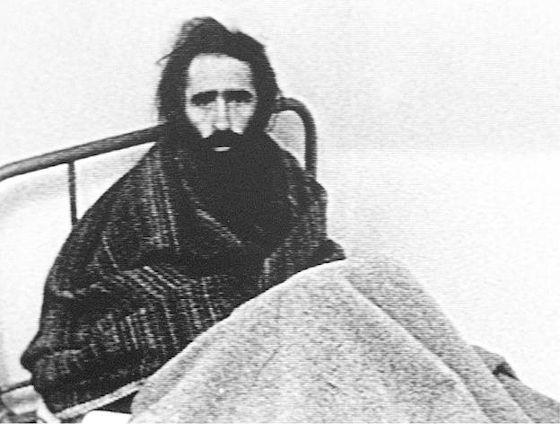
Brendan Hughes on hunger strike (Pacemaker Press)
Brendan Hughes had made his reputation as a peerless tactician, but at the very outset of the strike, he had made one significant tactical mistake. Because all seven men had embarked on the strike at the same time, eventually one of them would be the first to reach the brink of death, and the other six would be forced to choose between calling off the strike and saving him or pushing forward and letting him die. One of the younger strikers was a twenty-six-year-old from Newry named Sean McKenna. Hughes had not wanted McKenna to take part in the strike, but McKenna had insisted. Once the fast began, he quickly grew ill, and was eventually confined to a wheelchair in the hospital wing. As the strike progressed, McKenna grew more fearful, and at one point he said to Hughes, ‘Dark, don’t let me die.’ Hughes promised McKenna that he wouldn’t.
Just before Christmas, McKenna started lapsing in and out of a coma. Hughes saw orderlies rushing him on a stretcher through the hospital wing. He saw two priests standing with Dr Ross. If Hughes did not intervene, the boy would die, and he would have violated his promise, just as he had violated his promise of clemency to Seamus Wright and Kevin McKee. If Hughes did intervene, however, the strike would be over; the strikers would have blinked, squandering their leverage. Hughes could smell the festering bodies in the hospital ward. He was conscious of the smell of his own body eating itself. Finally, he shouted, ‘Feed him!’ And like that, the strike was over.
A doctor instructed the orderlies to prepare some scrambled eggs. As he started to eat again after his fifty-three-day fast, Hughes slowly recovered and regained weight. But he felt deeply ashamed about botching the strike. The prisoners decided, almost immediately, to mount a second strike. This time they would stagger the strikers, so that one would begin, followed by another a week or so later, and then a third a week or so after that. This way, the decision of whether to continue would not be a collective one. It would be entirely up to each striker to decide whether or not to die. Because Hughes was still recovering, the prisoners selected a new leader for this second strike. He would be the first to start refusing food and, presumably, the first to die. They chose the young volunteer who had coordinated the arts programme, Bobby Sands.
16
A Clockwork Doll
The pretty cathedral town of Armagh, about an hour’s drive from Belfast, was built on seven hills, like Rome. The skyline was dominated by the towers of two cathedrals, and near them stood a Victorian stone prison for women. Prior to the Troubles, Armagh jail had rarely housed more than a dozen or so women at any one time. Most of the inmates were locked up for charges of drunkenness, prostitution, or fraud. But during the 1970s, when Dolours and Marian Price arrived, the jail housed more than a hundred women, many of whom had been involved in republican activity. The decision to move the sisters to the women’s prison had sparked some controversy, because of the formidable danger that they were said to pose. One unionist politician likened this custody arrangement to keeping ‘a python in a paper bag’.
When the Price sisters stepped into the walled facility, a group of IRA women had assembled, holding a homemade banner that read, WELCOME HOME DOLOURS AND MARIAN. As they walked deeper into the prison, they saw other women staring at them and darting, nervously, in and out of cells. ‘Is it them?’ someone whispered. They were celebrities. ‘We had heard so much about these girls and I expected to see two skeletons,’ one of their fellow prisoners later recalled. Instead, she thought, ‘they were like two film stars’. The other women had made a point, prior to their arrival, of neatening up the place.
The sisters were introduced to Eileen Hickey, the no-nonsense officer commanding of the IRA inside the prison. She was reputed to be so formidable that even the screws listened to her. But the guards at Armagh were more relaxed than any that Dolours Price had previously encountered. They would hang back, lounging on a windowsill, giving the prisoners plenty of space. One of the women fried up some potatoes. Dolours ate them with gusto. She hadn’t tasted anything so good in years.
This ready-built community proved decidedly more hospitable than Brixton. But it was also the case that, after two years in confinement and the exertions and publicity of their hunger strike, the Price sisters were ready to retreat, somewhat, from their posture of political activism. Age has a way of curbing one’s appetite for frontline revolution, and they were growing older. But there was also a sense in which, having fought for a transfer back to Armagh, and having said from the start that they made no apologies for the bombing mission and would happily serve their time, the sisters had won. In March 1975, they were granted special category status, which meant that they did not have to work in the prison’s laundry and sewing rooms, as other inmates were required to do. They were allowed to wear their own clothes and to stay in a newly constructed area that housed the special category prisoners. C Wing, as it was called, was relatively commodious. The space was set up like a suite in a hotel, with a TV room and an eat-in kitchen.
The head screw, a woman with protruding teeth whom the prisoners called Big Suzie, was not as unsympathetic as the guards in England. Security was much less tight, and the women were not forced to stay in their cells for long stretches. During the days, Dolours would paint and write letters. She and Marian were also able to take correspondence courses. They made handicrafts, which could be sold on the outside to raise money for the cause. Dolours did leatherwork, though she didn’t enjoy it. In a letter to Fenner Brockway, a veteran British member of the House of Lords who had been supportive of the sisters during their time in Brixton, she described a wallet she was making him for his ninety-second birthday, and joked that when she put it in the post, he should not be alarmed at the sight of a ‘small parcel from N. Ireland’ – it was not a bomb. At night, after lockup, the women talked to one another from their separate cells. Someone would lead them in the rosary, in Irish. Sometimes people told ghost stories. To Dolours, Armagh jail felt like boarding school without the teachers. In one snapshot from this period, the sisters struck poses alongside a smiling cohort of fellow prisoners and managed, somehow, to look glamorous despite their surroundings.
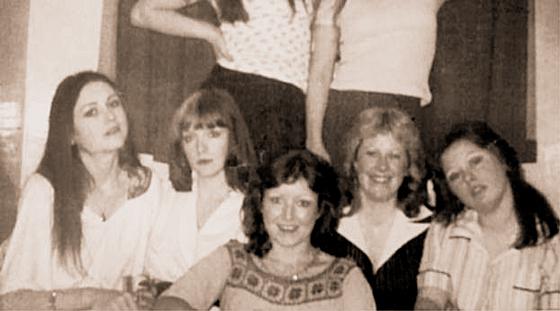
Marian and Dolours Price (at left) in Armagh jail (Still from the documentary Car Bomb, directed by Kevin Toolis, Many Rivers Films, UK, July 2008)
But if this new life was better than the old one, it was still life in prison, and it soon grew dull. One week stretched into the next, and Dolours began to fixate on the sky that she could see through the prison window, that little square of blue. Some of the women in Armagh had initiated their own dirty protest. But the Price sisters did not take part. They were beginning, in subtle ways, to draw back from the movement. ‘Things started going a bit askew and you started questioning things,’ Dolours said later. In February 1978, the IRA attacked the La Mon House hotel, outside Belfast, while it was crowded with civilians. The bomb killed twelve people and severely burned dozens more. ‘Things like that happened and you have to say, What is going on?’ Dolours recalled. ‘Am I here because I want to burn people to death? Am I here because I want to incinerate people?’ When the IRA ordered Dolours not to associate with other republican women who had chosen to abstain from the dirty protest, she resigned from the organisation, because she could not obey the order. Both she and Marian had achieved legendary status in the IRA for the sacrifices they had made, but from then on Dolours would become, in her words, ‘a freelance republican’.
In letters to Fenner Brockway, Dolours indicated that she had also begun to reconsider the efficacy of violence. ‘Dolours, like her sister Marian, [has] become convinced that the violence of the IRA is all wrong,’ Brockway wrote to Humphrey Atkins, the latest secretary of state for Northern Ireland. ‘I have told Dolours, as I did Marian, that if they were released from prison on the grounds that they had repudiated their previous action they would probably be shot by the IRA, and are therefore safer in prison.’ But by that time, the Price sisters were grappling with an affliction that was more pressing and immediate than politics.
‘We didn’t ever have a normal relationship with food or eating,’ Dolours said later. The months of starvation and force-feeding in England had irrevocably complicated their relationship with nourishment. During a hunger strike, Dolours pointed out, ‘your body is telling you it wants food, and you’re telling your body, “No, you can’t have food … We will not win this struggle if I give you food.” So there you’re setting up a very difficult mindset, which has to be rock solid, or you will eat food. Because, you know, that’s what the body does. That’s what we do. We eat food and then we live.’ After that experience of self-abnegation, Dolours continued, the force-feeding only compounded the trauma, because ‘it further alienated us from the process of sustenance, the whole process of putting food into your body’. As a result, she concluded, ‘we both ended up with very, very, very distorted notions of the function of food and we both found it very difficult to re-establish a proper relationship with the process of eating’.
There may have been some element of social contagion at play within the intimate confines of Armagh jail. Several other women in the facility had recently succumbed to anorexia. The sisters were no longer on hunger strike, but now they, too, stopped eating. Marian’s weight began to drop precipitously. A confidential government assessment eventually concluded that ‘to leave her in prison would be to leave her to die (for crimes through which no one was killed)’.
On 30 April 1980, Marian was released from jail and went voluntarily, under an assumed name, to the Royal Victoria Hospital in Belfast. A government spokesman said that she had been receiving ‘intensive medical treatment for the past three years’ but that she could no longer be treated in Armagh. On 1 May, she checked out of the hospital. This news sparked an outcry. English tabloids implied that she had engineered a velvet prison break – that anorexia was simply the latest clever ruse by the IRA.
Dolours was elated to see her sister walk free. Marian had been close to death, and now she would live. But deep down, she felt conflicted. ‘All along, a little part of me had always hoped and thought that because we’d been through everything together, that again this would be a together thing,’ she reflected later. The sisters had always been lumped together – as Albert’s daughters, as student protesters, as members of the Unknowns, and as prisoners and hunger strikers. Now, for the first time, they were uncoupled. To Dolours it felt ‘like I’d been separated from my Siamese twin’.
Like Brendan Hughes, Bobby Sands had grown up Catholic in a Protestant neighbourhood. But when Sands was seven years old, his neighbour discovered that he and his family were Catholics, and they were ejected from their home. Eventually, Sands had joined the IRA. On 1 March 1981, he stopped eating. His last morsel was a prison ration orange. It tasted bitter. ‘I am standing on the threshold of another trembling world,’ Sands wrote on a scrap of toilet paper as he commenced his strike. ‘May God have mercy on my soul.’ Two weeks later, a second protester initiated a strike, and one week after that, a third, until eventually there were ten men on hunger strike at Long Kesh. There was no reason to think that Margaret Thatcher would be any more sympathetic this time around than she was during the previous strike. ‘Faced with the failure of their discredited cause, the men of violence have chosen in recent months to play what might be their last card,’ Thatcher said.
But four days after Sands commenced his strike, a politician named Frank Maguire died, triggering a dramatic chain of events. Maguire was a nationalist who held a seat in the British House of Commons, representing Fermanagh and South Tyrone. His sudden death would necessitate a by-election. Initially, Maguire’s brother considered running to take over his seat, but he was approached by some republicans who urged him to reconsider. An improbable but possibly ingenious plan was being hatched: Bobby Sands would run for the seat, from behind bars. This would be a publicity stunt, to be sure – but a resonant one. What better way to garner attention and support for a hunger strike than to have one of the strikers run for office? If Sands were to win, it would dramatically upend the power dynamics of the strike: the British government might allow some unkempt blanketman to die in prison, but what about a Member of Parliament?
This gambit marked a radical departure for the Provos. There had been moments in history when republicans ran candidates for elective office, but the movement had long been suspicious of the parliamentary process. For generations, many republicans had adhered to a tradition of ‘abstentionism’ – staying out of politics altogether. There was a sense that one’s revolutionary fervour could be diluted all too easily by the system. This had been part of the basis for the split in 1969 between the Official IRA and the Provisionals – a sense that the Officials had become too political and that politics would inevitably lead to accommodation.