CHAPTER NINETEEN
“MR. MALONEY WOULD HAVE
PULLED NO PUNCHES”
Summer in Washington, D.C., is a season of acute physical depletion. Heat is a daily drain on the most energetic of federal employees and officials; humidity shrink-wraps sweaty shirts and dresses onto just about everybody, regardless of status or standing. Very democratic, the weather in Washington. In July 1942, back before the widespread use of air-conditioning, the nation’s capital was slogging through its annual communal torpor. But not William Power Maloney. The “Little Napoleon of the courtroom” had a real bounce in his step. He was on a roll.
Maloney had already won the convictions of both George Hill and George Sylvester Viereck. During the Viereck trial, the widow of Senator Ernest Lundeen had shown up in court to testify in Viereck’s defense. When later commanded to produce the Viereck files she had spirited away from her husband’s Senate office a few days after the plane crash that killed him, Mrs. Lundeen explained to the court that, sadly, there had been a break-in at her home and that some of the files must have been taken by the burglar. Yes, it must have been a burglar. (Years later, hundreds of pages of correspondence from the “missing” files would turn up—not burgled at all—in the Lundeen family archives.) Up against evidentiary shenanigans like that, Maloney still achieved not only the conviction of Hill and Viereck but also the exposure of the Lundeen-Viereck congressional Nazi propaganda scheme, all in open court.
Maloney had also successfully prosecuted Charles Lindbergh’s female doppelgänger: the famous lady flier and America First spokeswoman Laura Ingalls. The same Laura Ingalls who had stunt dropped antiwar leaflets on the White House grounds in 1939. United States v. Laura Ingalls was a novel and telling case in the Department of Justice’s effort to stem secret Nazi-funded information operations in America. Ingalls was not charged for her political views or for her vocal support of Adolf Hitler—all perfectly legal, constitutionally protected speech. But at trial, Maloney did make sure the jury got the drift of her pro-Nazi sentiments: She often wore a silver swastika bracelet. She had asserted that democracy was a dying form of government (“bunk,” she called it) and that the United States “needs somebody like Hitler.” The führer, she would say, “is building a country, while America is in chaos.” She hurrahed the sinking of a British battle cruiser by the German navy in May 1941. “ I could tear the skies apart in triumph,” she wrote to a friend at the German embassy, “Sieg heil.” She prayed for a “swift German victory” in Europe, which would keep America on the sidelines, and perhaps even leave the United States open for Hitler’s taking.
When the question of entering the European war still hung in the balance, Baron Ulrich von Gienanth, the SS officer and Lawrence Dennis pal who oversaw U.S. propaganda operations out of the German embassy in Washington, had counseled Ingalls that “ the best thing you can do for our cause” would be to affiliate with the America First Committee. Just like Lindbergh. Problem was, the America First Committee was kind of cheap. Ingalls complained to von Gienanth about the pittance of a travel stipend the committee offered. So, he offered funds from the Nazi coffers to put her on their payroll, which she happily accepted; another German diplomat later explained that von Gienanth “ had a special liking” for Ingalls and “thought she would be a good propagandist.” Whether she was good at propaganda or not, Ingalls failed to register with the State Department as a paid agent of a foreign government. That’s what put her in the dock, indicted by Maloney’s special grand jury.
The Ingalls defense team decried the prosecution as a “witch hunt” and portrayed the celebrity aviatrix as a sort of aeronautical Joan of Arc: righteous and inspirational. Also: crafty. Her attorney told the jury that her relationship with the Nazis was all part of an intricate and reasoned double-agent ploy: she was only faking at being pro-Nazi; all along, she had been planning to turn over to the FBI all the inside dope on Germany she could glean by (very convincingly!) pretending to be on their side. This defense did not fly.
Ingalls, Hill, and Viereck were all in custody—and news of the Nazi plot in Congress was still making waves—when, on July 23, 1942, Maloney’s federal prosecutors unleashed yet another court filing to shake the nation’s capital from its summer doldrums. All at once, they indicted twenty-eight people and charged them with sedition. Viereck and Prescott Dennett from the War Debts Committee were both named, as were William Dudley Pelley of the Silver Shirts; General Moseley’s water taster and antisemitic publisher, Charles Hudson; James True (he of the “kike killer” weapon); and Noble and Jones from Los Angeles, whose stand-alone charges just after Pearl Harbor had previously been dropped. Among the organizations named in the court papers were the Silver Shirts, the German American Bund, the Crusader White Shirts, the Protestant Gentile League, and the America First Committee, as well as Viereck-run entities like Flanders Hall, the Make Europe Pay War Debts Committee, and the Islands for War Debts Committee.
Maloney’s terse and declarative twenty-eight-page indictment was based on almost seven thousand pages of grand jury testimony from more than 150 different witnesses. It charged the defendants with “intent to interfere with, impair, and influence the loyalty, morale, and discipline of the military and naval forces of the United States.” Germany’s propaganda scheme targeting the United States went far afield from military bases and installations, of course, but Maloney believed this was the charge that would stick. And also get the word out. Without naming or indicting them, Maloney in his court filings described how members of Congress had helped the Hitler government launder Nazi propaganda and send it, in bulk, to American soldiers, sailors, and marines as well as to the public at large.
Maloney had developed evidence that franked envelopes from Representative Hamilton Fish’s office had been used to send out literature from Pelley’s armed Silver Shirts, as well as a mail-order form for people to receive copies of the Protocols of the Elders of Zion, Henry Ford’s go-to anti-Jewish forgery promoted by the Nazi Party and their fellow antisemites across the United States.
Crucial new pieces of evidence in the charging document were provided by that seasoned sleuth from The Washington Post, Dillard Stokes. Under the pseudonyms “Jefferson Breem” and “Adam Quigley,” Stokes had sent requests for information to various ultra-right publications in the spring of 1942. These publications then happily shipped to Messrs. Breem and Quigley Nazi-produced propaganda, often reprinted by the federal government right from the Congressional Record and then tucked into franked envelopes from congressmen. The franked envelopes were supplied by Prescott Dennett or George Hill, who were on the payroll of Nazi agent George Sylvester Viereck. One of these mailings to “Jefferson Breem” at 3917 Pennsylvania Avenue, SE, for instance, showed that writing to an antisemitic extremist newsletter like Charles B. Hudson’s America in Danger! was enough to put you on the mailing list to receive free, German-funded, congressionally franked propaganda from America First’s favorite senator, Burton K. Wheeler.
The senators and congressmen who had participated in Viereck’s scheme knew when Viereck was convicted and the sedition indictment was unsealed that DOJ prosecutors were onto them. The investigation had clearly expanded beyond the offices of the late senator Ernest Lundeen and Congressman Hamilton Fish. If prosecutor William Power Maloney was indeed hot on their trail, the implicated members of Congress were going to have to figure out a way to deal with him. As Henry Hoke put it, “ When the first special Grand Jury brought in its indictment against 28 persons, Maloney became one of the most hated men in Washington.”
But any pained shouts and murmurs from Viereck’s congressional co-conspirators were drowned out by the commotion in or near the courtroom. The newspapers couldn’t get enough, for instance, of the Henry Ford–financed huntress of American commies, Elizabeth Dilling, and her attorney husband. Dilling had been dumping antisemitic fantasist bilge into America’s information waterways for twenty years, but now was her chance to enjoy getting some real ink for herself in the mainstream press. Dilling, for example, would stop on her way into the courthouse to treat reporters and her supporters to performances of her latest songs, like “ B-b-baloney,” mocking Prosecutor Maloney. (Which was disruptive, but not as vicious as the outlandish rumors she circulated that Eleanor Roosevelt had infected the president with gonorrhea.)
Even after the indictment, Dilling, the “den mother of anti-Semitic conspiracy theories,” was still giving interviews praising Germans as “ the best-fed, best-housed, most powerful, hopeful in Europe.” At her arraignment, where she pleaded “absolutely not guilty,” Maloney called her a “stooge” of the Nazi Goebbels. Which was kind of true, but perhaps not politic.
At a later hearing, Dilling’s attorney husband complained to the judge about the unfairness of it all, claiming he had heard rumors that the Department of Justice was preparing a massive new indictment of any Republican anywhere who had voted against Roosevelt. Going back to 1932! People are saying. “ Those rumors have their origin in the fertile mind of Mr. Dilling,” Maloney told the judge, who probably already knew as much.
Pretrial hearings and motions dragged on through the end of the year; the judge in the case refused to grant the defendants’ pleas and motions to drop the charges. As the 1942 Christmas season approached, Maloney’s sedition case was clearly headed for trial, which promised a very public airing of some very dirty laundry on the congressional clothesline. Lawyers for the accused seditionists—wisely—made it a point to keep all the implicated elected officials informed as to the ongoing proceedings at court. Lawyers for Viereck and the other sedition defendants reportedly met in person every weekend in the office of Senator Gerald Nye to plan strategy. Now that Viereck had been exposed at his own trial as a Nazi agent, of course, one option for lawmakers would be to help with the case. Fess up, cooperate, help root out the rest of the Nazi propaganda operation that might still be ongoing.
But apparently that option did not appeal. The congressmen and senators instead chose door number two: try to burn the whole thing down.
ON DECEMBER 8, 1942, Representative Clare Hoffman of Michigan (whose frank had been used by Charles B. Hudson’s America in Danger! to mail out antisemitic poison) invoked a point of personal privilege on the House floor, shutting down all legislative business in the chamber. He then took a full hour to defend himself and other members who were being investigated and questioned by federal prosecutors. Hoffman’s integrity, his patriotism, his exemplary character, had been called into question, he claimed. He was deeply hurt. The way Representative Hoffman saw it, the sedition indictment itself was an act of religious bigotry; the defendants were poor, persecuted Christians.
Hoffman then introduced a resolution calling for a special committee to investigate DOJ for its overreach and demanded that Dillard Stokes and his editor at The Washington Post be called before the new committee and compelled to testify. He even wanted to haul in the famous Nazi-bashing newspaper columnist Walter Winchell for questioning. “Is it not true,” Hoffman said on the floor that day, “that Walter Winchell, the gossipmonger, Peeping Tom, the digger into garbage cans, and the purveyor of rot; William P. Maloney, pettifogging special attorney for a grand jury; and Dillard Stokes, alias Jefferson Breem, alias Quigley Adams [sic], he of the perverted mind, acting together, sought to create, and did create, the false impression that Members of Congress were disloyal and unpatriotic and, by doing so, frightened some Members of Congress into silence?”
However frightened Congressman Hoffman might have felt, he was sufficiently sure of himself to accuse the DOJ’s William Power Maloney of gross prosecutorial misconduct.
Maloney was undeterred. In fact, he was apparently inspired to swing for the fences. Four days into the new year of 1943, he produced a superseding indictment, adding five new defendants, including George Deatherage, and Deatherage’s onetime assistant Frank Clark, a Silver Shirt true believer who had moved to Tacoma, Washington, to found something called the National Liberty Party. Clark’s party pledged to stay active “ as long as a single Jew remains alive on the North American continent.” Also named in the superseding indictment: Leslie Fry, the woman who had first given the Protocols of the Elders of Zion to Henry Ford, and later gave succor (and cash) to the Los Angeles crazies who planned the mass lynching of prominent Jews in Hollywood. The updated indictment made the single biggest sedition case in American history even bigger. The new court filing also dated the beginning of the Hitler-run propaganda conspiracy to 1933, back to when Leon Lewis had first stood up his cadre of private spies in Southern California.
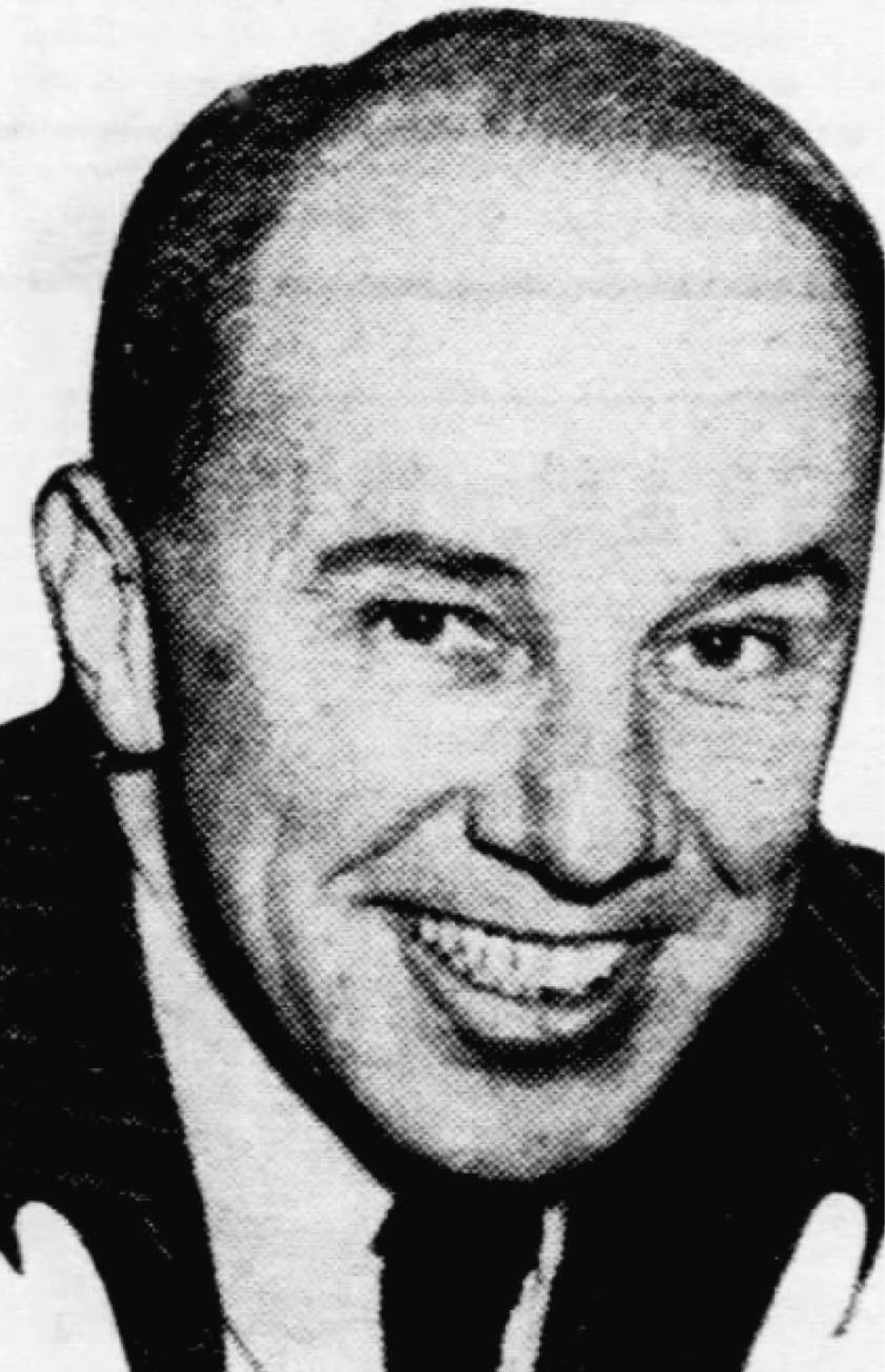
DOJ prosecutor William Power Maloney
What seems to have led to the superseding indictment is that William Maloney’s investigators had finally traveled to Leon Lewis’s headquarters and hoovered up the files Lewis and his spies had been producing for an entire decade. Those same files that Lewis had been trying to give to local law enforcement, the FBI, the Secret Service, army intelligence, the Department of Treasury. There was so much there. “ All of these individuals, all of these groups who Leon Lewis and his team of private undercover agents had been tracking for years while law enforcement couldn’t be bothered—they were all now being wrapped up,” says historian Steven Ross. “[Lewis and his team] were providing not just witnesses, but they were providing all the paperwork and spy reports dating back to August 1933.
“There’s an old expression, ‘If you live long enough, you’ll win all the awards.’ Well, [Leon Lewis] may not have won all the awards, but he earned the admiration or at least the respect of the American government.”
WITH THE ADDITION of Lewis’s extraordinary mountain of evidence, Maloney and his investigators had discovered the double helix of the violent, Nazi-supporting, and Nazi-supported threat in the United States; it was part foreign and part domestic, part propaganda and part armed paramilitary movement. One of Lewis’s agents provided eyewitness evidence that some pro-Nazi groups knew in advance of a raft of explosions at industrial plants in 1940, one of which was manufacturing a million pounds of TNT for Great Britain every month. The biggest explosion was at the Hercules Powder plant in Kenvil, New Jersey, which was operating twenty-four hours a day to stock the arsenal of democracy, to feed the U.S. allies in Europe, and to prepare the American military in the event the country was drawn into the war. At least forty-eight workers died in the blast. Two months later, three explosions within half an hour of each other rocked three separate war plants in New Jersey and Pennsylvania. The damage, according to some estimates, cost the U.S. war preparation effort $1.5 billion in man-hours.
Whether those explosions were accidents, or strictly a Nazi sabotage operation, or sabotage plotted to help the Nazis but carried out by Americans was never conclusively proven by the government. But a spy on the ultra-right providing advance warning of the first blast, and then the choreographed timing of the second round of explosions, was enough to rattle everyone’s cage.
This much was certain: Germany had agents at work inside the United States; armed American fascists were being actively supported by the Hitler government; members of Congress were colluding with a German propaganda agent to facilitate an industrial-scale Nazi information operation targeting the American people; critical U.S. munitions plants were blowing up in multiple states. And the Justice Department, at last, was going to act to take it all apart. At least it was going to try to.
Representative Hoffman, Senator Nye, and Senator Wheeler kicked up a second storm after Maloney’s superseding indictment. They continued to demand an investigation of the investigators. Hoffman invoked his personal privilege anew and excoriated “the misuse by Maloney, an assistant to the Attorney General of the United States, of his official power, used as it was in furtherance of a conspiracy to destroy the Congress, a coordinate branch of our government.” Nye chimed in too but did himself no favors. The defendants, the North Dakota senator claimed, “have seemingly done nothing more than I and others of us here have done time and time again.” He said they “are no more guilty than I am.” Henry Hoke noted, “ In that he may have been right.”
Wheeler was the most voluble, as always. The senator accused Attorney General Francis Biddle of overseeing “one of the most disgraceful proceedings ever carried on in this country” and claimed the case was brought solely to smear America First, which was now defunct. He also claimed that one Dillard Stokes report that his frank was being used by a crazy fascist antisemite in Omaha to send out Nazi propaganda was a “ plain, unadulterated lie.” Which was itself a plain, unadulterated lie, based on the actual evidence. But evidence notwithstanding, Senator Wheeler predicted that Stokes and Maloney and the rest of the prosecutors would rue the day they started this investigation. This was not an idle threat.
Two weeks after Wheeler’s ominous philippic, William Power Maloney was named the chief of the criminal trial section of the Justice Department, which, technically, was a promotion. But it was also something else. Senator Burton Wheeler was more than just a blowhard in white ducks; he was a senior member of the Senate Judiciary Committee, which oversaw the Department of Justice. Wheeler had paid a visit to Attorney General Francis Biddle at his office at Main Justice. In what was described as a stormy and violent session, Wheeler reportedly threatened the attorney general that he would make good on his promise to launch an investigation of the entire Department of Justice, from the attorney general on down, unless Biddle took Maloney off the case.
In the face of that threat, Attorney General Biddle—remarkably—caved. He gave in to the pressure from Wheeler and other members of Congress. Biddle “promoted” Maloney, and in so doing, removed Maloney from the case he had been building for more than a year. Maloney himself got the news while he was sitting at his desk, working. First he heard of it was when a newspaper reporter called him up to ask his reaction to getting fired. He’d had no idea, he said. They hadn’t bothered to tell him.
In this historical era of the Department of Justice, alongside whatever heroics may attend to its prosecutors and investigators, there is also this broken bone, sticking out like a compound fracture. In the middle of this controversial, high-profile case, William Power Maloney was removed as prosecutor because of pressure from members of Congress who themselves were implicated in his investigation. The Washington Post published a blistering editorial criticizing Biddle’s decision: “ In this case the public could have been sure that Mr. Maloney would have pulled no punches, whether the evidence incriminated a conspirator or embarrassed one of his friends in Congress. Maybe that was why Congressional friends of the defendants hated and feared this prosecutor and publicly harassed Mr. Biddle with windy threats of investigation, with boasts of what they would do to the Department of Justice unless they got Mr. Maloney’s scalp. Now they have it.”
THINGS GOT WORSE for Maloney in the coming weeks. The U.S. Supreme Court, in a 5–2 decision, overturned the conviction he had won in the Viereck case. The majority found that the main fault was in the murkiness of language in the Foreign Agents Registration Act. Viereck, they decided, had possibly complied with the letter of the law by registering himself as an “author and a journalist” in the pay of Germans, even though he didn’t mention his voluminous German-funded work in Congress on a propaganda scheme dreamed up and directed by the Nazi high command.
The court’s majority opinion basically missed the entire point of Viereck’s endeavors and his paymasters, but it didn’t stop at the nearest exit, where it could have; the opinion also made a frontal attack on William Power Maloney and his personal exuberance. “In his closing remarks to the jury, [Maloney] indulged in an appeal wholly irrelevant to any facts or issues in the case, the purpose or effect of which could only have been to arouse passion and prejudice,” wrote Chief Justice Harlan Fiske Stone. “At a time when passion and prejudice are heightened by emotions stirred by our participation in a great war, we do not doubt that these remarks addressed to the jury were highly prejudicial, and that they were offensive to the dignity and good order with which all proceedings in court should be conducted.”
William Power Maloney, in other words, in the opinion of the most powerful jurists in the land, had been way too mean to George Sylvester Viereck, and way too fired up about the stakes of this case.
There were plenty of voices in Congress that agreed; it’s easy enough to imagine exactly who. Clare Hoffman, for instance, said it was an “outrage” that Maloney was still drawing a government paycheck; he called for Attorney General Biddle’s head on a platter, too.
AFTER THE HIGH court’s decision, a remarkable new character entered the stage: North Dakota senator William Langer, an unpredictable, eccentric isolationist known as Wild Bill in his native environs. Langer had been convicted of a bold pocket-lining kickback scheme while serving as governor of his state back in 1934. He was hit with a federal charge, convicted, and sentenced to eighteen months in prison. Governor Langer pronounced his federal criminal conviction illegitimate, rejected the court order removing him from office, declared martial law in the state, attempted to declare North Dakota’s independence from the United States, barricaded himself in his office, and refused to leave.
After his supporters filled the streets of Bismarck and called for the shooting of his successor, the lieutenant governor, Langer finally gave up the governorship and then managed to win an appeal of his conviction. He was re-elected governor in 1936, and won a seat in the U.S. Senate in 1940. When he got to Washington, his fellow senators weren’t sure whether they should seat him. A special committee made an investigation into his whole corruption, martial-law, secession, armed-revolt thing and found that Langer’s path to the Senate was definitely problematic. The phrase “moral turpitude” was used. The investigating committee found that Langer had exhibited “continuous, contemptuous, and shameful disregard for high concepts of public duty” and was therefore unfit to serve. The full U.S. Senate took the findings under advisement, but in the end they decided that a little coup here or there didn’t necessarily render a man unfit to serve in the highest legislative body in the nation.
Wild Bill, who believed he knew all about persecution and redemption, had an immediate reaction to the high court overturning Viereck’s conviction. His statement was in the evening papers the day the Supreme Court’s decision was announced: “ Senator Langer, praising the decision, said he would propose that a committee be named to determine the expense Viereck incurred in his defense, with a view to compensating him for his expenditures as well as for the time he has spent in jail. He added that whatever relief Congress may be able to give Viereck will be ‘inadequate’ to ‘wipe out the wrong that has been done.’ ”